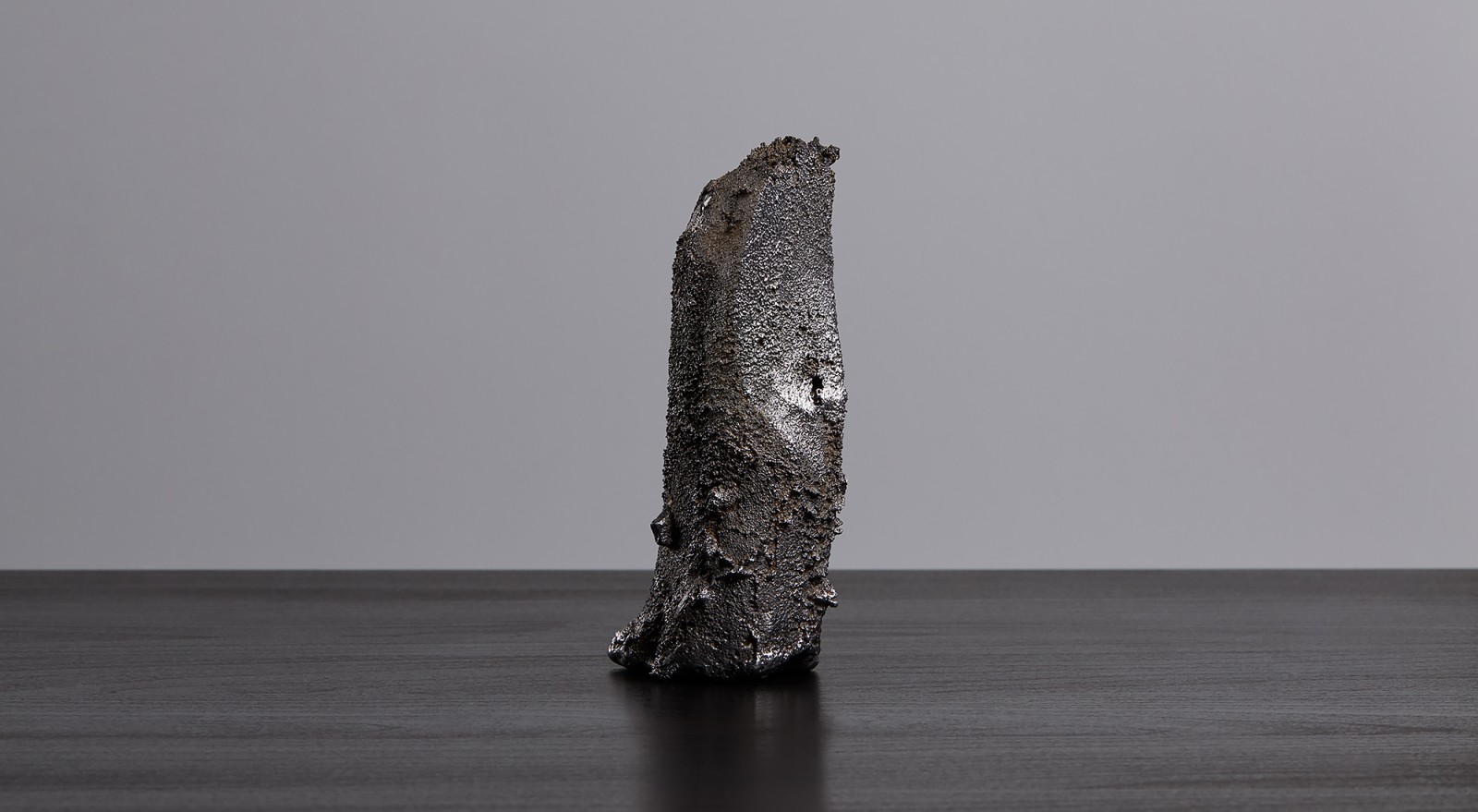
Tevere 2 (for Luigi) 2025
lead, broken glass, river sand and sediments excavated from the banks of the Tiber
5 x 6.5 x 13.5 cm
Created as part of For Luigi, a research and presentation collaboration with the painter Jelena Telecki honouring the life and work of Luigi Valadier.
First presented British School at Rome, Open Studio Program, June 2025.
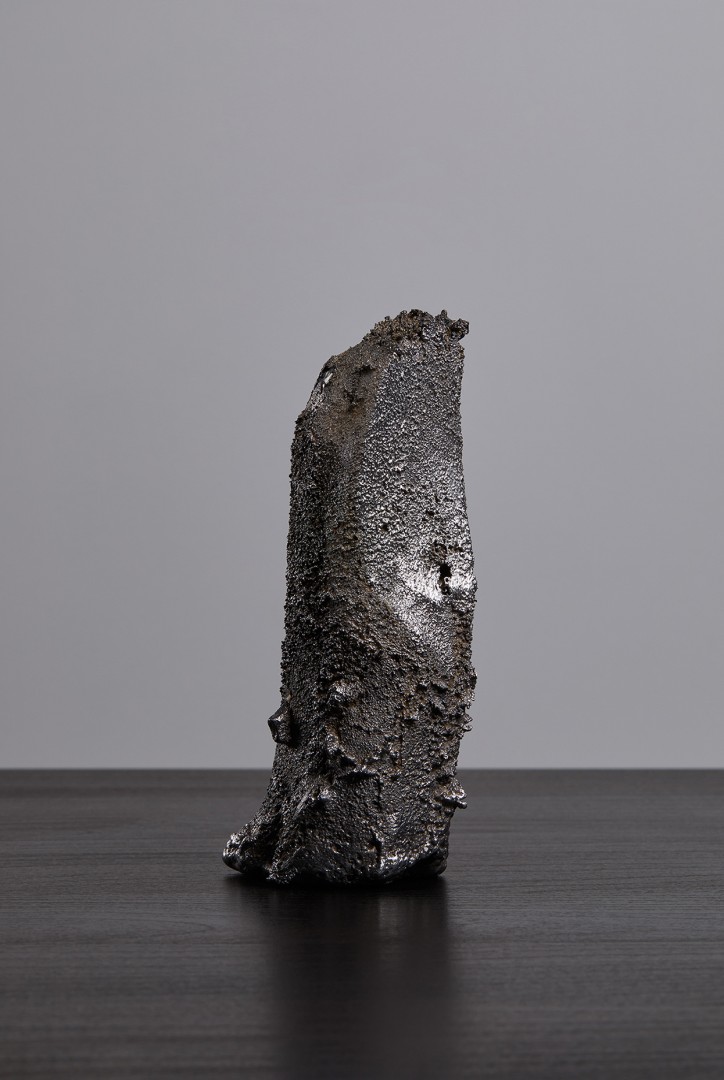
Tevere 2 (For Luigi) is one of a group of four cast lead objects that collectively comprised the main sculptural element of the exhibition For Luigi, a research and presentation collaboration between Hazewinkel and the Yugoslavian born painter Jelena Telecki.
Through a historically focussed lens their project reflected on the at times murky nature of artist-patron relationships. This body of contemporary, research rich, painted and sculpted works examined the productive but ultimately destructive relationship between Luigi Valadier the Pope Pius VI.
Luigi Valadier was the most celebrated sculptor, designer, draftsman, goldsmith, silversmith and bronze founder of eighteenth-century Rome. He and his workshop of almost one hundred people produced luxury objects – functional, decorative and devotional – for the Catholic Church and many of Europe’s wealthiest families.
On September fifteenth, 1785, Luigi Valadier committed suicide by drowning himself in the Tiber in repsonse to mounting financial distress resulting from unpaid commissions. He left unfinished a large bell for the Vatican’s St Peter’s Basilica. Il Campanone (The Great Bell) was completed by others following his death. Today it is rung only on Christmas Day, Easter Sunday, and to announce the death of a Pope.
Hazewinkel’s Tevere 2 (for Luigi), and its companion work Tevere 1 (for Luigi) were cast in river sand the artists excavated from the banks of the Tiber at the site where Luigi Valadier entered the water.
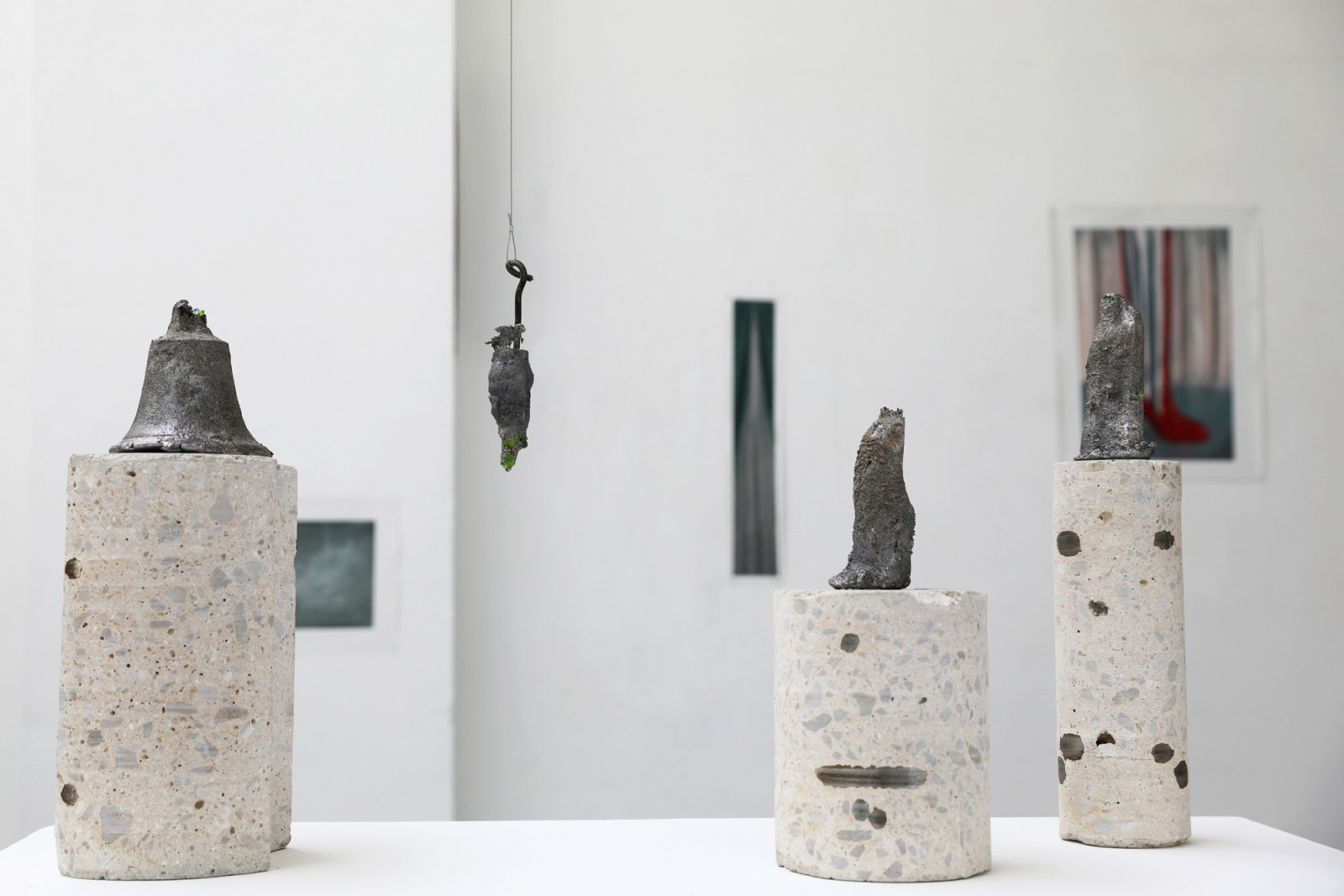
Studio documentation photographed by Giorgos Vitsaropoulos, installation documentation by Andrew Hazewinkel
