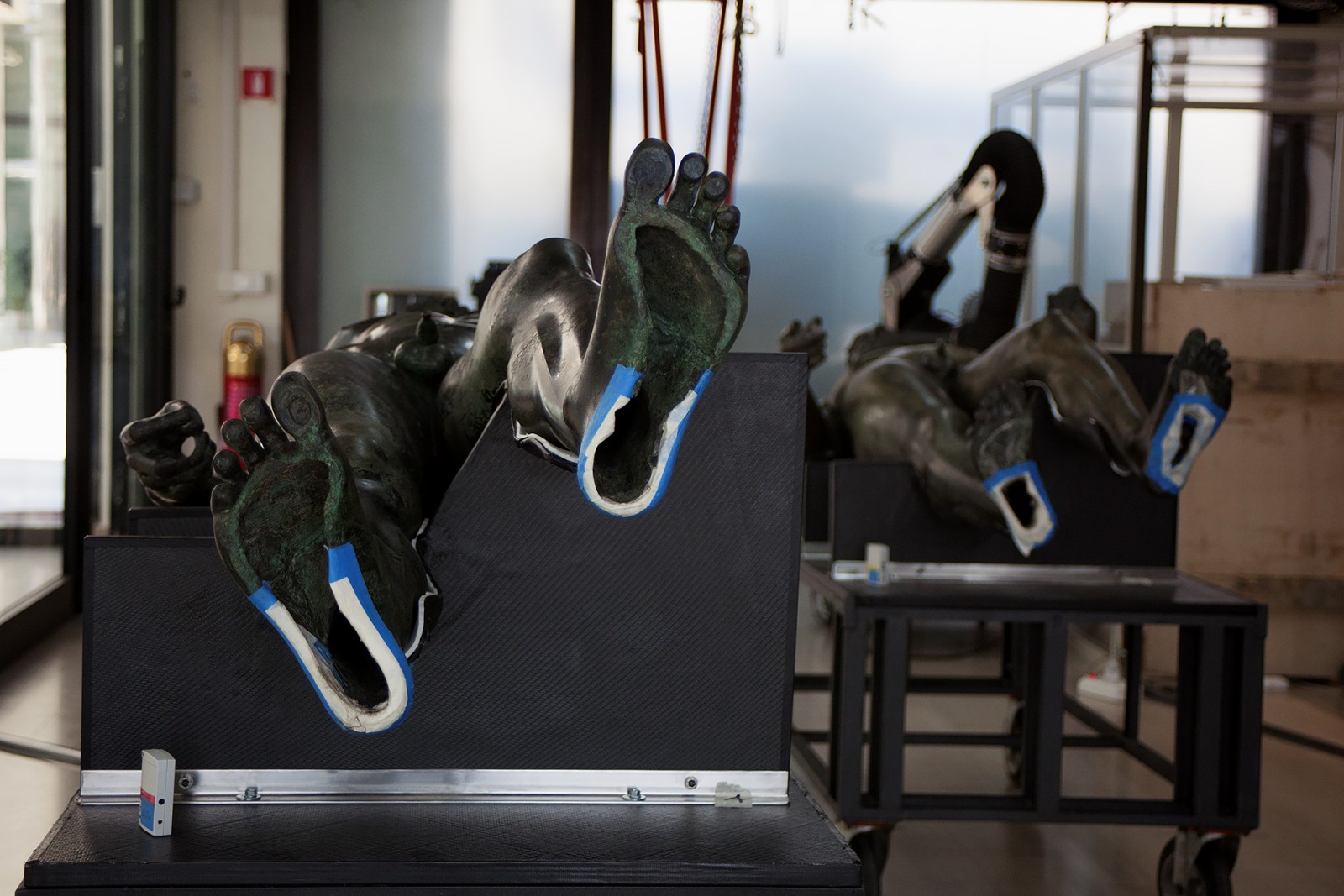
Warrior A Warrior B: 2014
4.44 minute single channel HD projection with audio composition by J. David Franzke
Warrior A Warrior B was originally commissioned by the Australian Centre for Contemporary Art in 2014.
It featured in All in Time, Hazewinkel's contribution to the exhibition NEW14.
See Professor Anthony Gardner's text The Sleep of Reason that accompanied All in Time here
See related gelatin silver photograph Warrior B here

Warrior A Warrior B focuses on two of the most important bronze male nudes that have come down to us from (Western) classical antiquity, in doing so it reveals the artwork's psychological concerns - the interplay between the conditions of vulnerability and desire.
Created in Greece during the mid 400's BCE, Warrior A and Warrior B (also known as the Riace bronzes), today stand upright in an architectural space designed specifically for them at the National Archaeological Museum of Reggio Calabria in Italy. However, Hazewinkel captured the images he used to create this video as the two figures lay side by side on provisional trolleys while undergoing material analysis and conservation processes in a temporary laboratory set up in the foyer of the Municipal Government’s regional headquarters. Separated from the public by a glass wall, the examination and treatment of the bronzes, as well as Hazewinkel's photographic activities, were on public display, giving the whole operation a sense of the intimate being made public (or perhaps pornographic). For the artist, the heroic figure's horizontality imbued them with a sense of exposed vulnerability, and if we consider their modern (art historical) designation as Warriors, it is not difficult to think of them as injured, unnamed soldiers in a contemporary theatre of war, awaiting treatment in a makeshift field hospital.
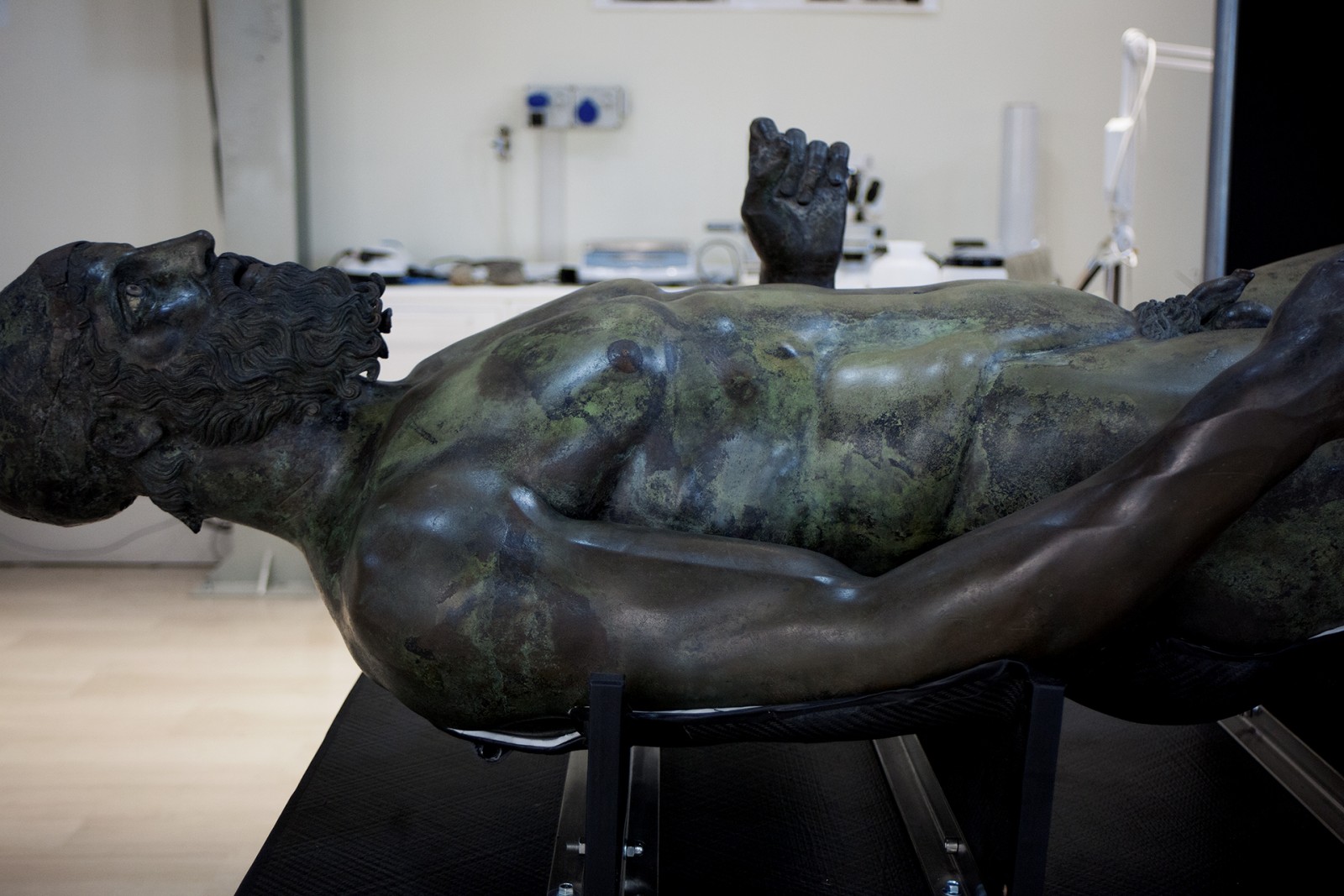
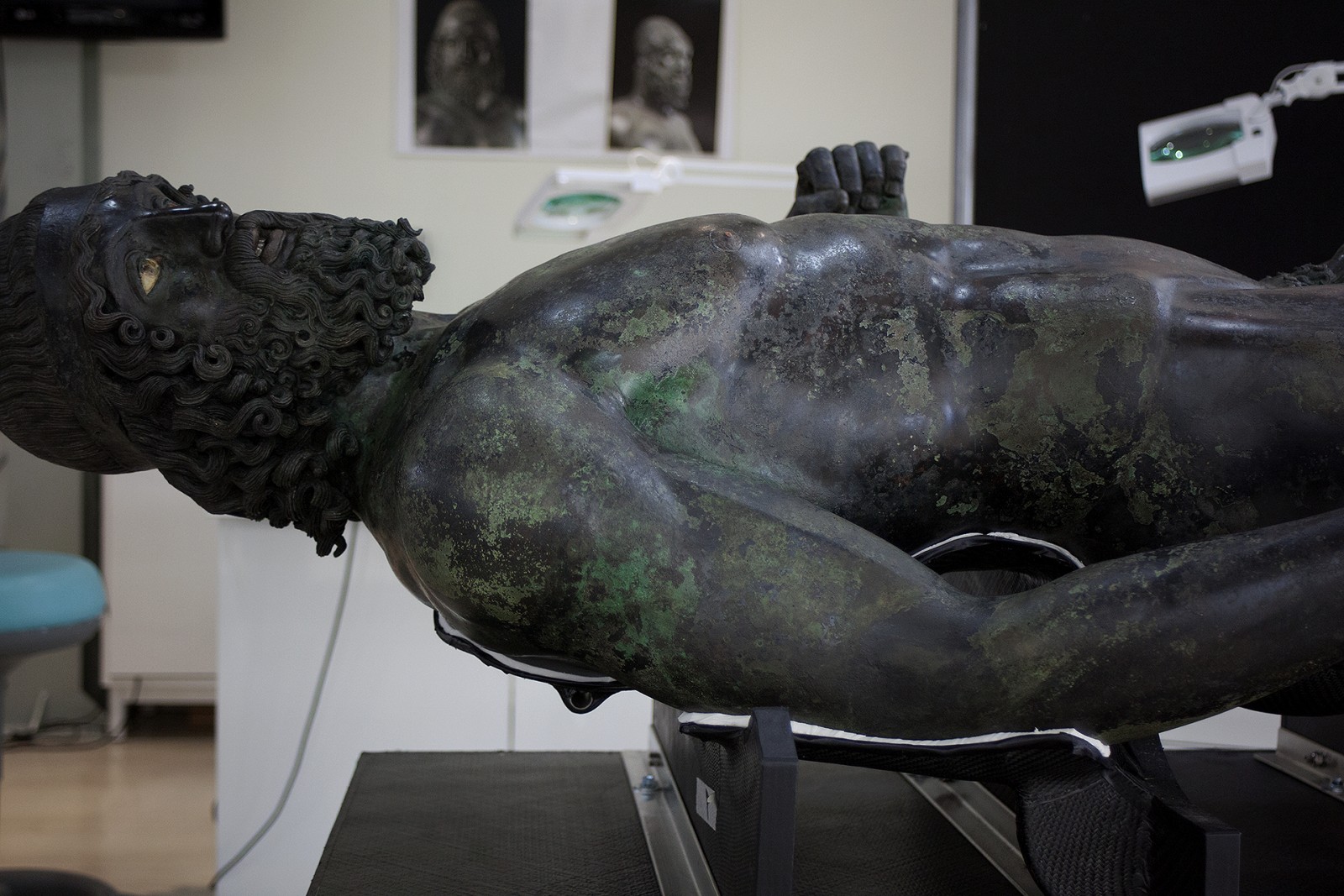
The following text, composed by Professor Anthony Gardner, accompanied the first public presentation of the video in which, as part of an ensemble of wall-based and floor-based sculptural works, it was projected from above onto a glass screen suspended above the viewer.
" Unearthed from the Mediterranean seabed more than 2000 years after their making, the Riace bronzes are usually seen upright, heroic, locked away in a climate-controlled vitrine. In Hazewinkel’s work, however, they’re both intimately alive and curiously vulnerable. The camera brushes over nipples, toes, bronzed flesh, inner thighs, eroticising the inanimate. Yet the warriors are leant back into gurneys, rendered helpless, spent. Staring up at the projected image, it’s hard not to mirror the warriors’ upturned, slightly pleading gaze even as we follow the camera perving on their bodies. The rigid verticality of the warriors and the phallic column alike gives way to a more nuanced horizontality – or better still, to a kind of delicate limbo between axes, much like the limbo the statues lived in for millennia hidden beneath the sea (and which persists in a different guise, in the cryogenic capsule of the museum)."
Hazewinkel's access to the bronzes and photographic permissions were provided courtesy of
Ministero per i Beni e le Attivita Culturali Soperintendenza per i Beni Archeologici della Calabria.
