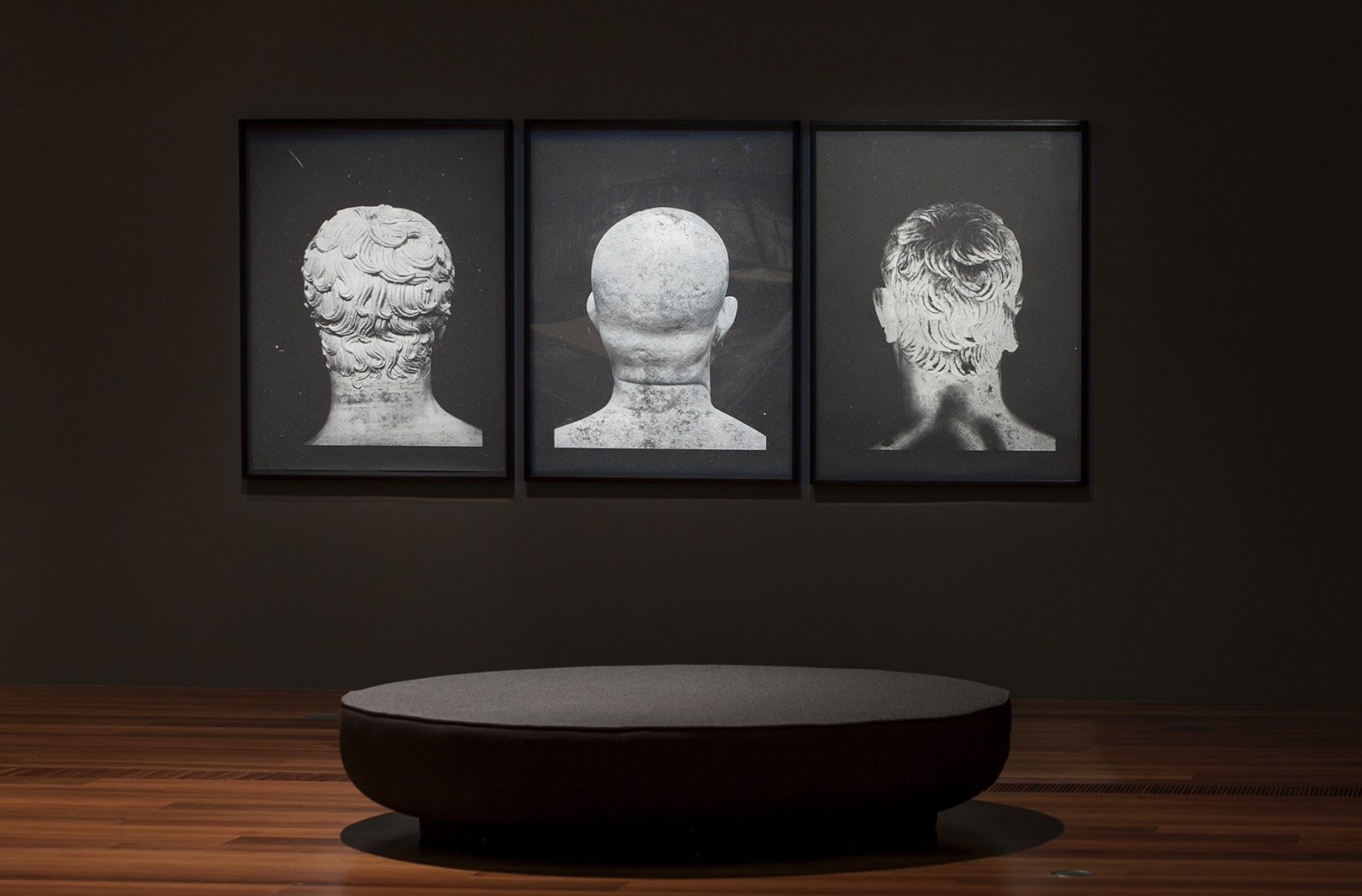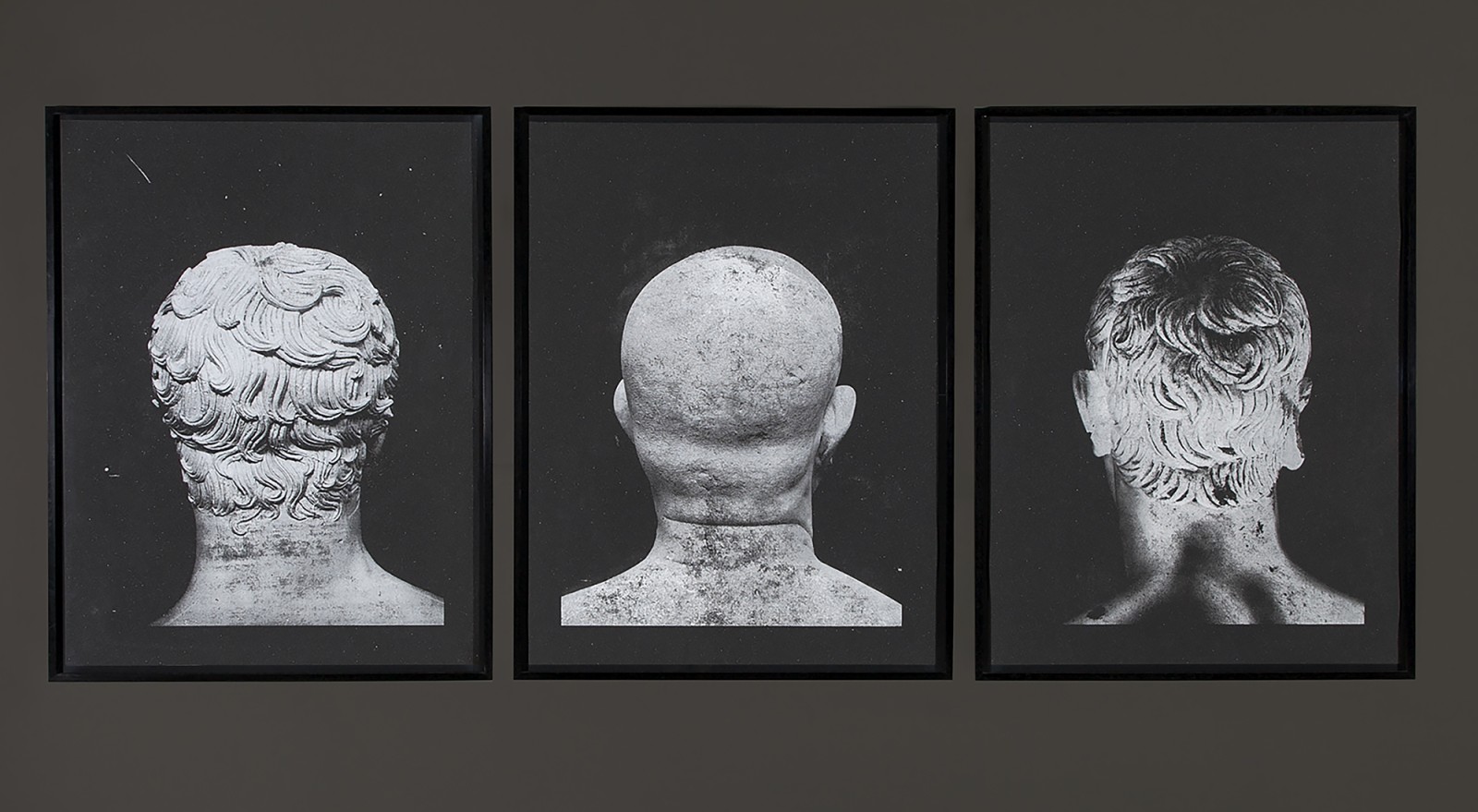
Material Collision (staring together at the stars) Parts 1,2,3 2013
screen-prints on carborundum sandpaper
sheet dimensions 139 x 105 cm
individual framed dimensions 146 x 112 cm
overall framed dimensions 146 x 356 cm
Ed 3 + 1 AP
Material Collision (staring together at the stars) Parts 1,2,3 was commissioned by the National Gallery of Victoria for the 2014 exhibition Melbourne Now. In 2014 it also received the Australian National Work on Paper Acquisitive Award. Edition 1/3 is held in the permanent collection of the Mornington Peninsula Regional Gallery.
In 2010, Hazewinkel was in the audience of Hiroshi Sugimoto’s keynote that opened the 17th Biennale of Sydney, The Beauty of Distance: Songs of Survival in a Precarious Age. While adressing the inspiration for his Seascapes project, Sugimoto said something that has stayed with Hazewinkel as an enduring thought prompt, "I wondered if it was possible for modern people to see the landscapes that the ancients once saw. Then I realised that it must be the sea." 1
Three years later that thought played a defining role in shaping Hazewinkel's motivation for creating Material Collision (staring together at the stars) parts 1,2,3 in which he too has tried to create an image of what the ancients may have seen. Whereas Sugimoto turned to the horizon at sea, Hazewinkel turned to the night sky.
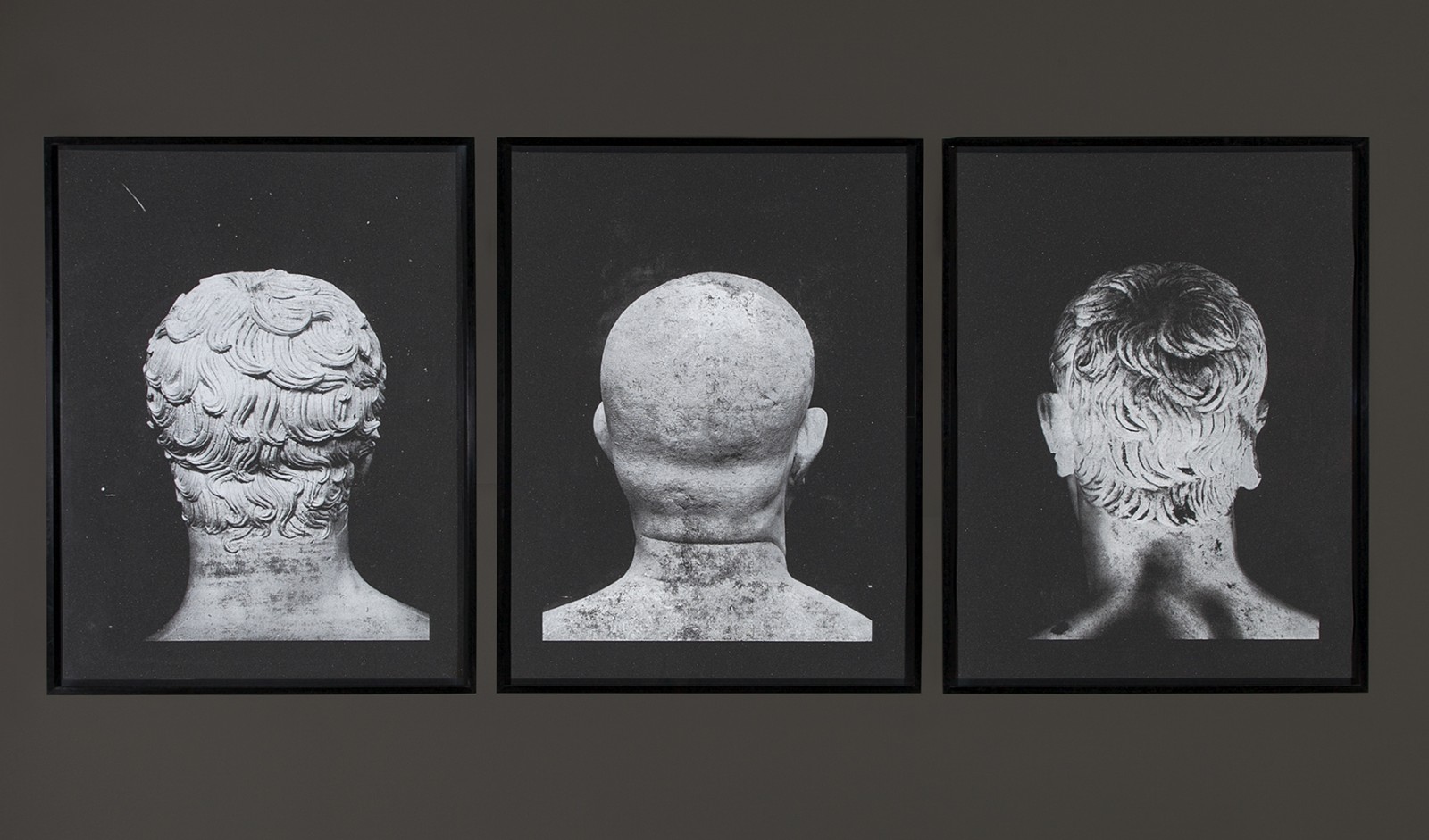
Comprising tightly cropped details from three late-nineteenth century glass plate photographic negatives, that have been screen-printed onto large sheets of carborundum sandpaper, each panel of this triptych sparkles softly like a night sky as it links specific periods that are dispersed across a vast expanse of historical time.
Those periods are the first and second centuries CE (in which the sculptures were created), the late- ninteenth / early-twentieth centuries CE (when the sculptures were unearthed and first photographed), and our time (the early twenty-first century CE) when this this triptych was created.
The starry qualities of the triptych are difficult to capture in documentation images, it is an experiential light phenomenon. However the scratches and pittings in the original glass negatives have been transfered (through the process of digitisation) to the files that the artist has used in the screen printing process. These marks mingle with the visual effect created by the light refracting qualities of the silicon carbide particles that dust the surface of the carborndum sandpaper.
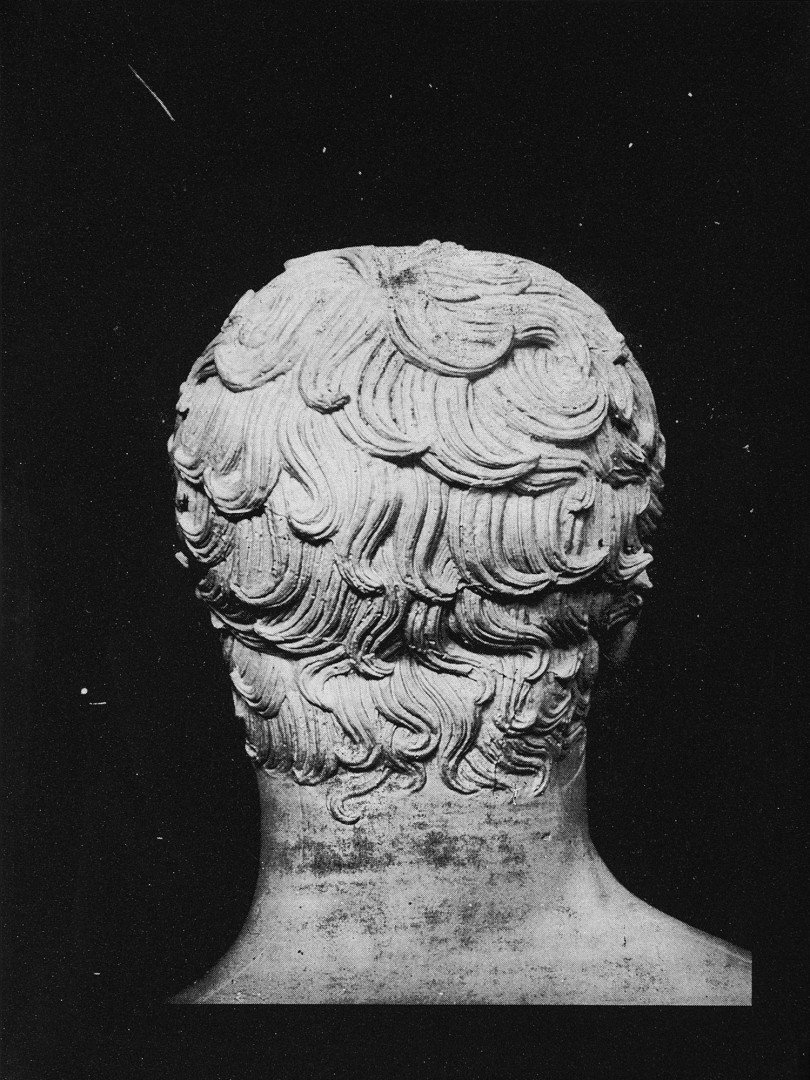
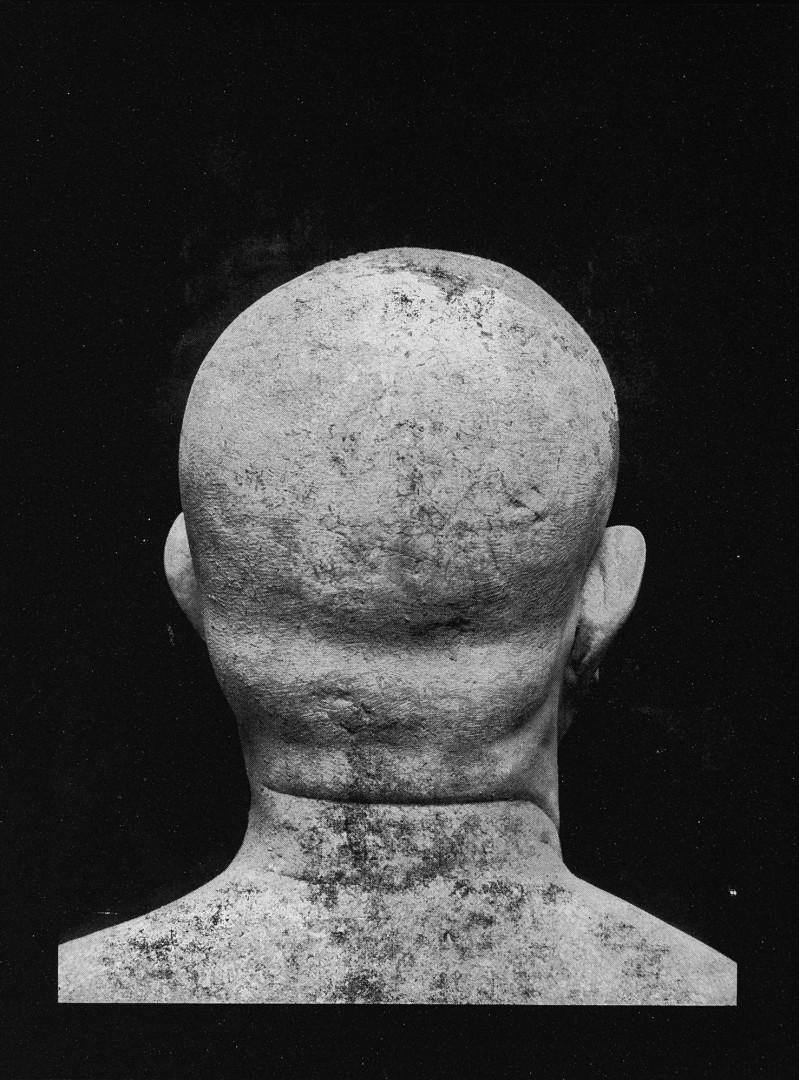
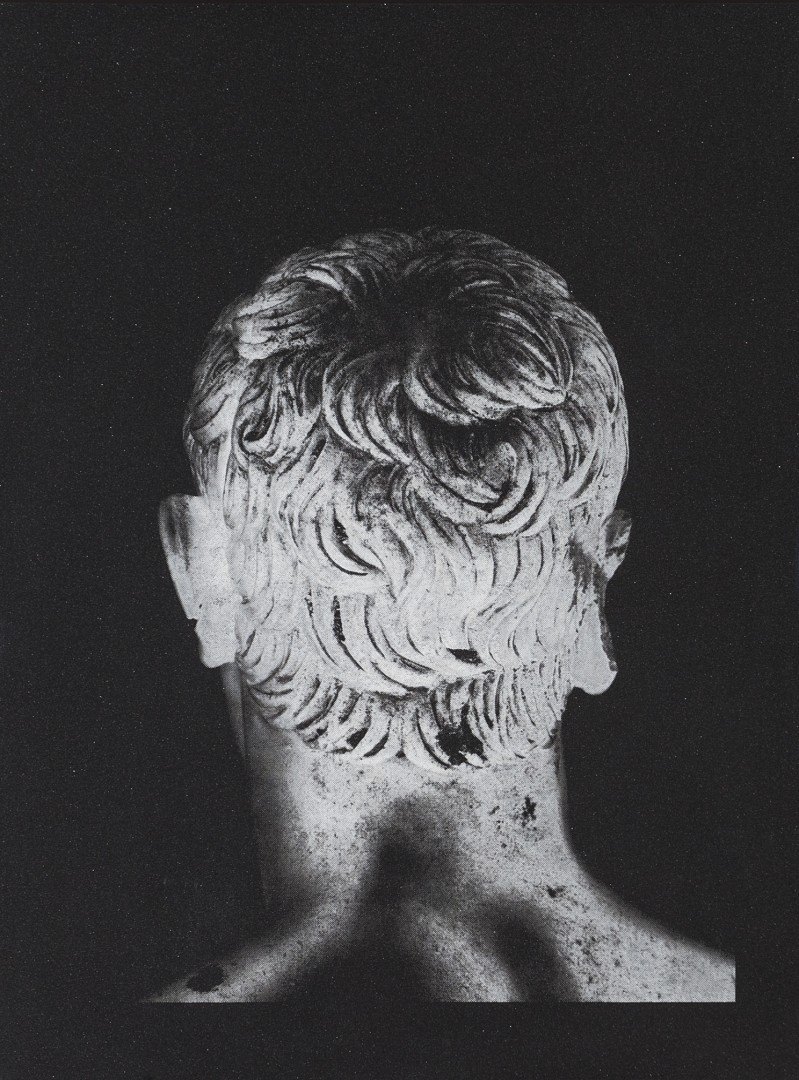
Sandpaper, sand itself, and emery dust have been used in sculptural processes for a very long time. Here sandpaper maintains its affiliation with histories of sculptural production and it becomes, both conceptually and materially, an essential part of the artwork.
The movement from production tool to being conceptually and physically a part of the artwwork merges with the essentiality of silicon as an ingredient in the materiality of the glass plates, from which these images were sourced: and the surface onto which the images are printed.
Here two materially and processually linked substrates (the delicately dimensional surface of the carborundum sandpaper and scratched and pitted small panes of ninteenth century glass), enter a materially semiotic exchange that on a material register, futher extends the poetic dimensions of the work.
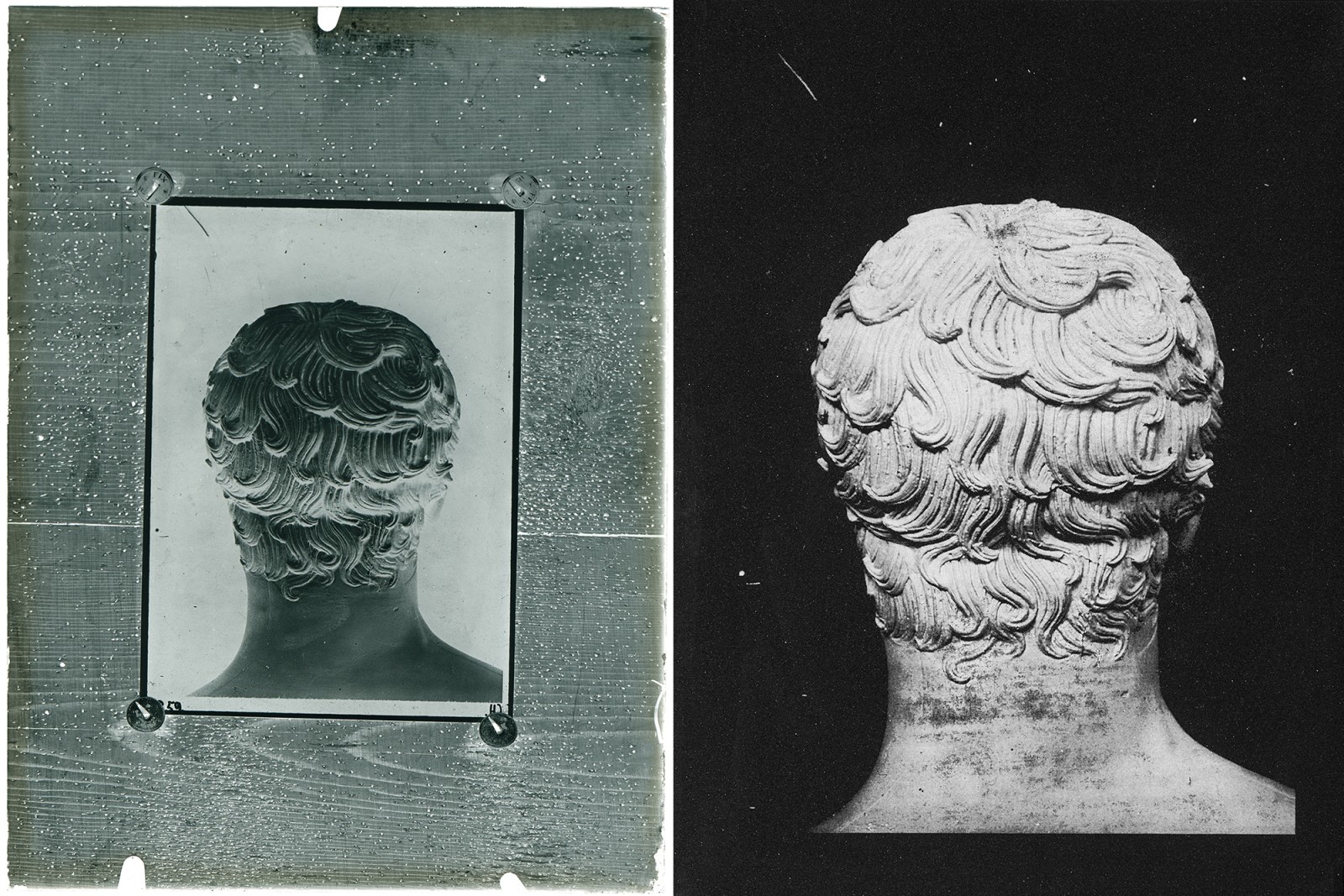
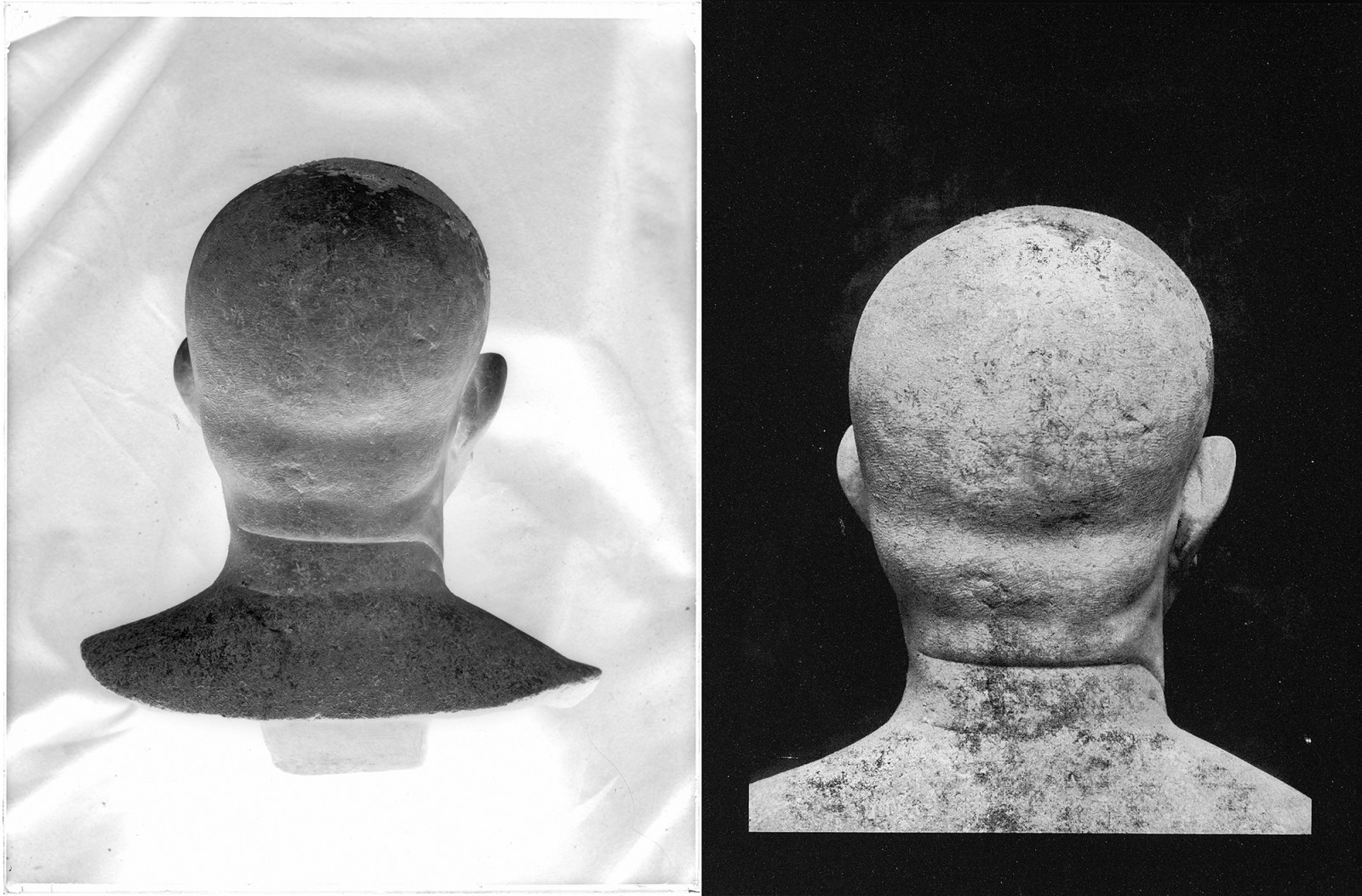
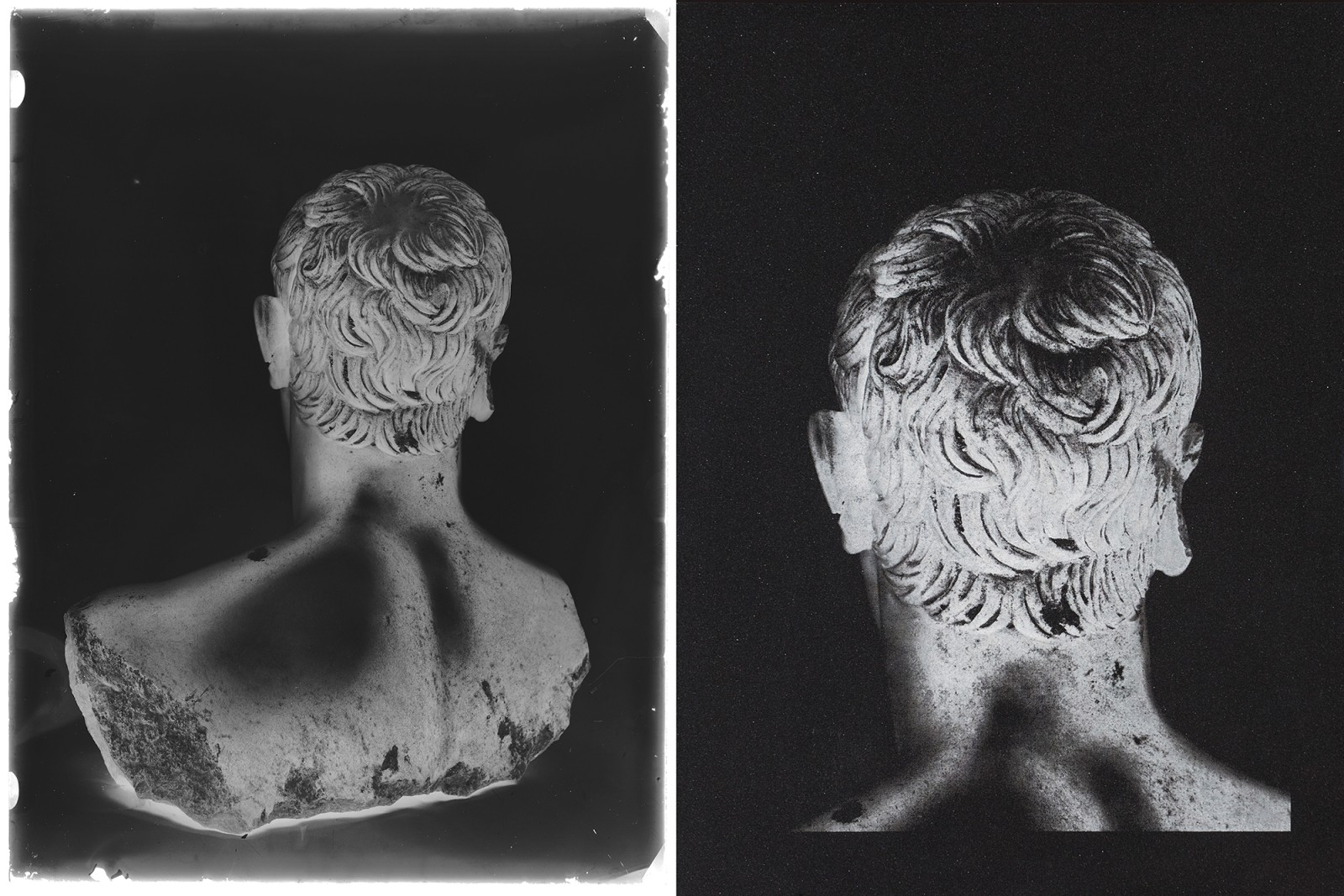
Here we see only the shoulders, necks, and the back of the heads of three male figures, everything else has been stripped away. We might consider the triptych as three individual reverse portraits, or perhaps a group portrait, or a tableau in which we the viewer becomes another figure joining a group that is already staring together at the stars. In each of these possible readings we experience a sense of the timeless intimacy of the human figure.
However, as we settle into the performative aspects of joining a tableau of ancient viewers, we gaze beyond the figures that stand before us, we gaze with them, and in doing so we gaze not at history, rather we gaze with history, at the stars.
1. This citation can also be found in Sea and Sky: The Dawn of Consciousness, Mami Katoka in
Hiroshi Sugimoto Time Machine, Hayward Gallery Publishing, London and Hatje Cantz Verlag GmbH, Berlin 2024