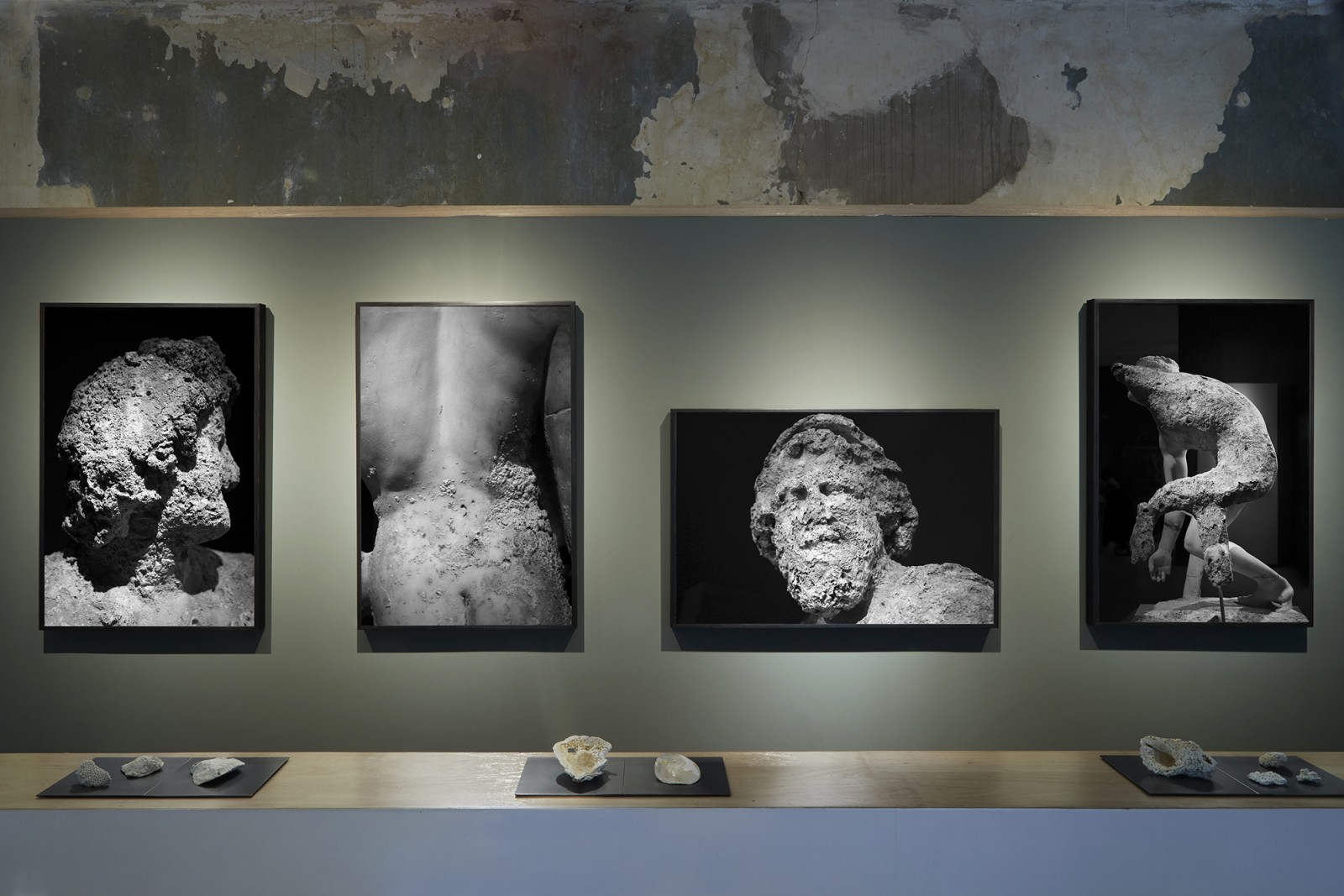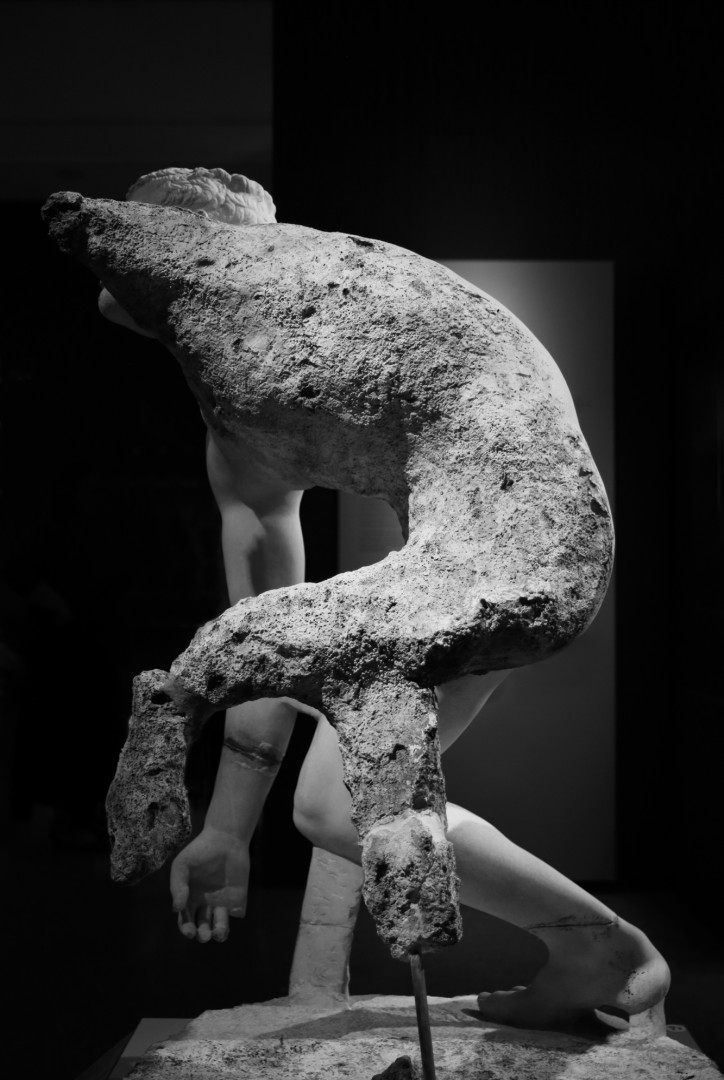
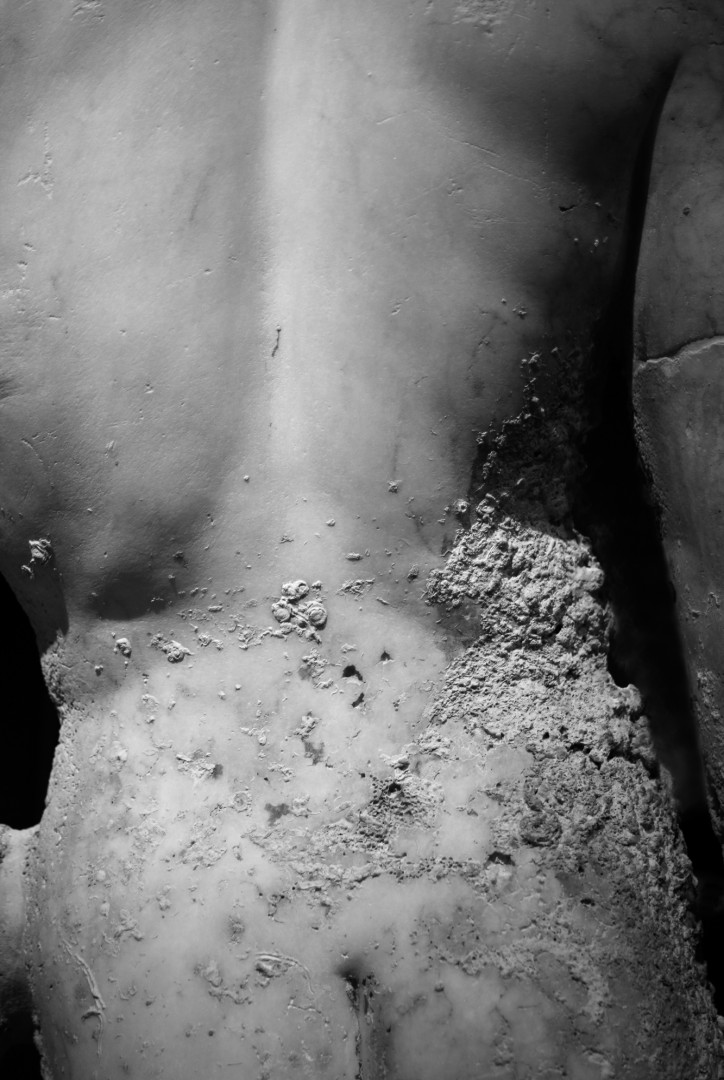
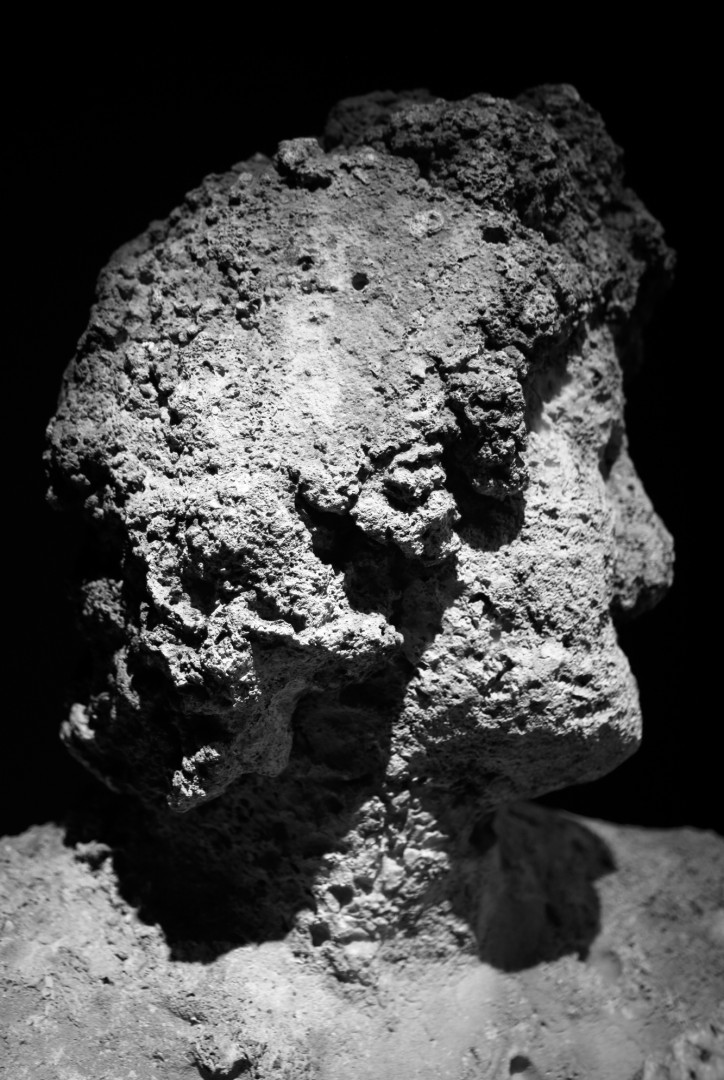
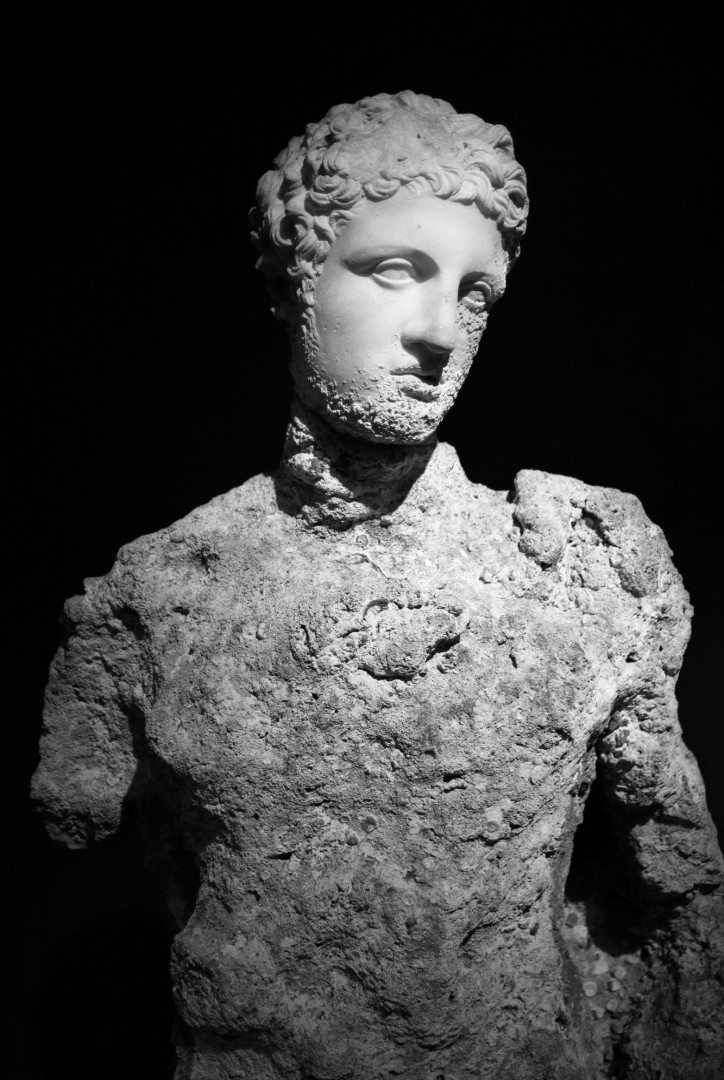
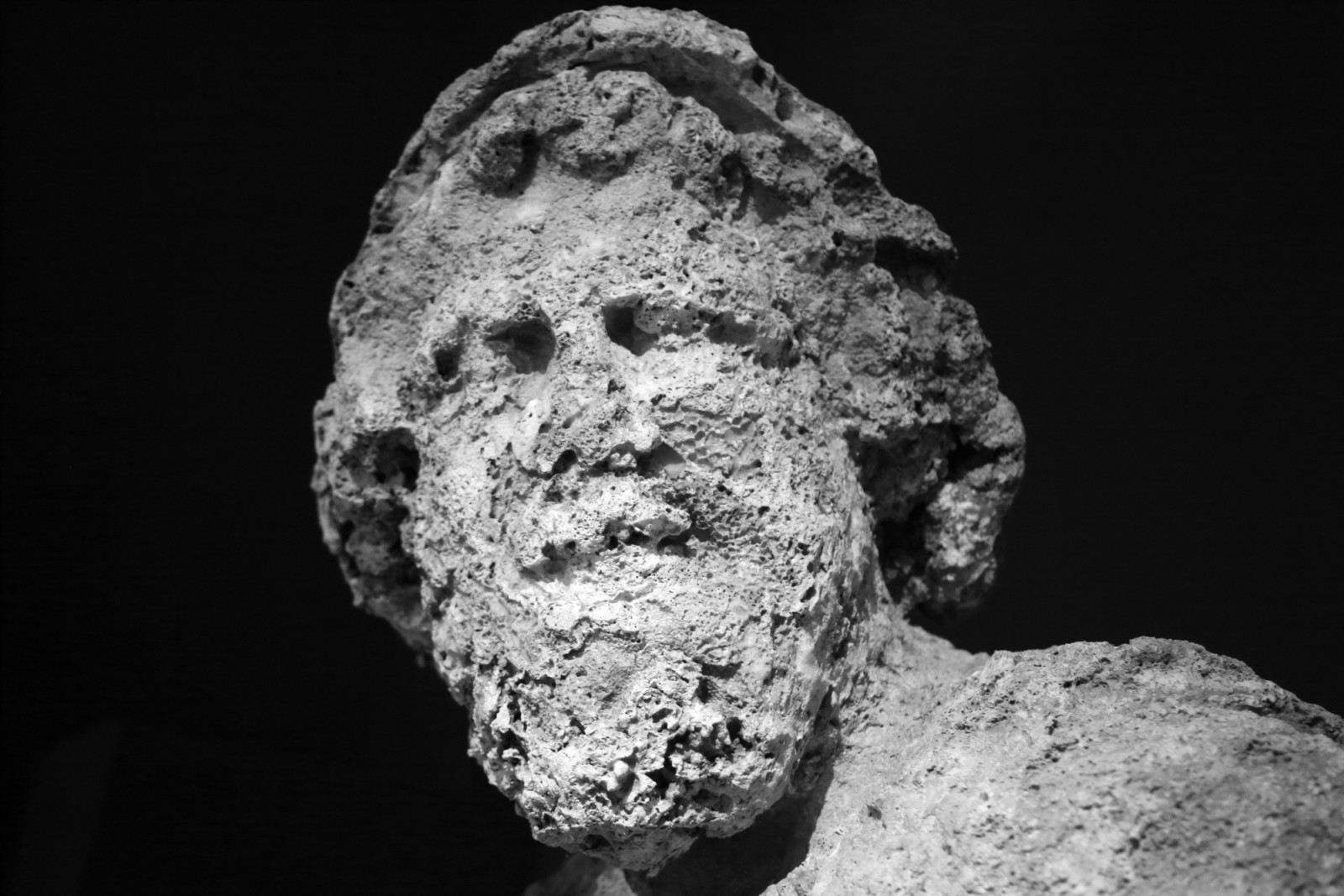
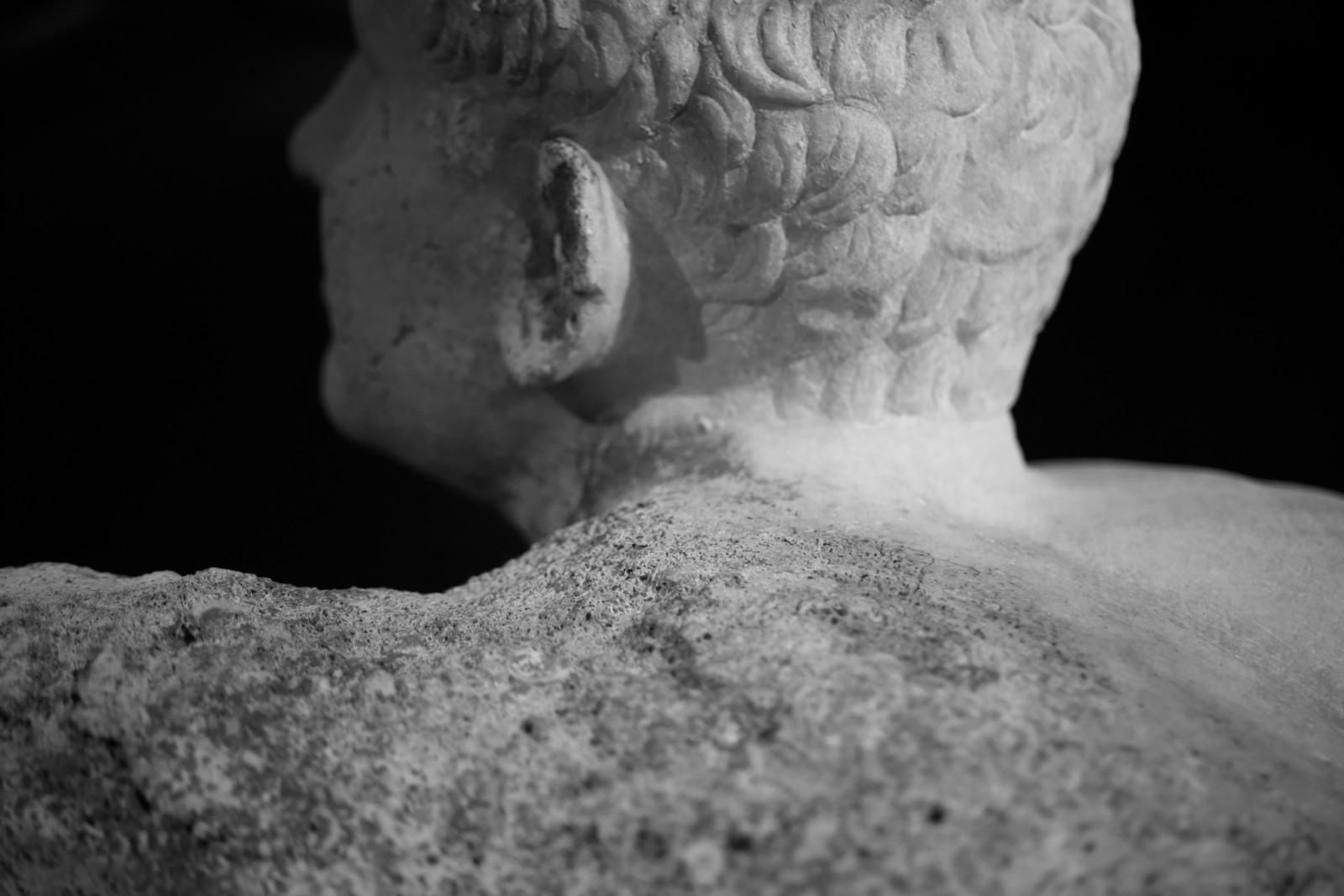
The Antikythera Group : 2017
digital C Type prints on metallic paper
1-4 : 90 x 60 cm
5-6 : 60 x 90 cm
Ed 3 +1 AP
1. Antikythera 1
2. Antikythera 2
3. Antikythera 3
4. Antikythera 4
5. Antikythera 5
6. Antikythera 6
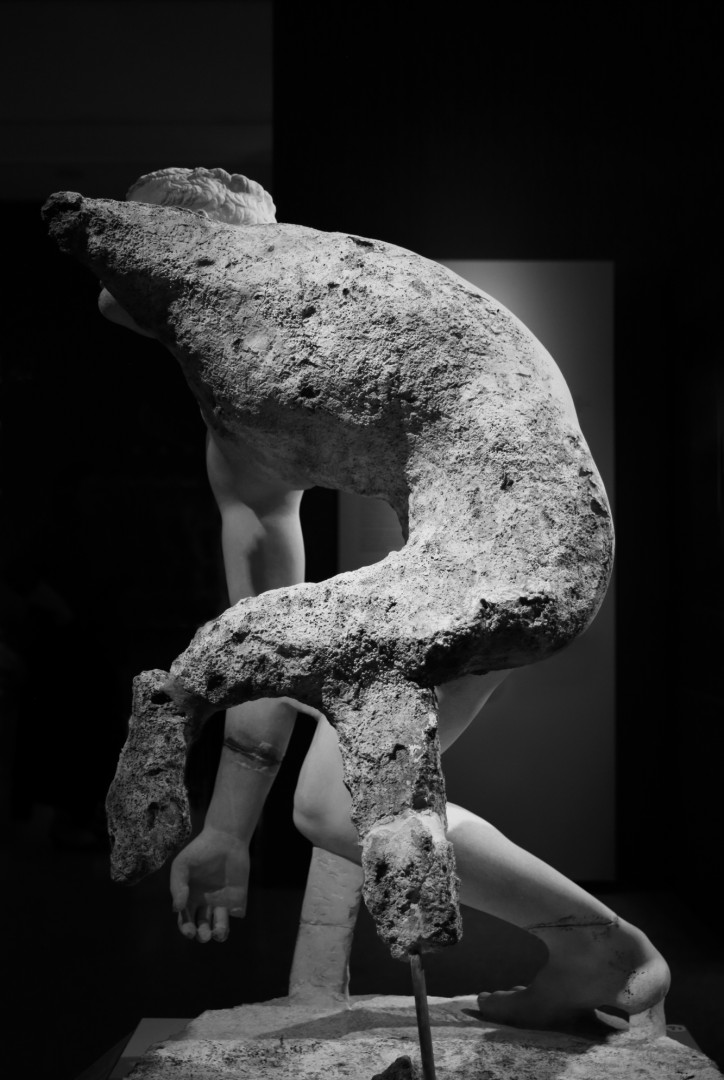
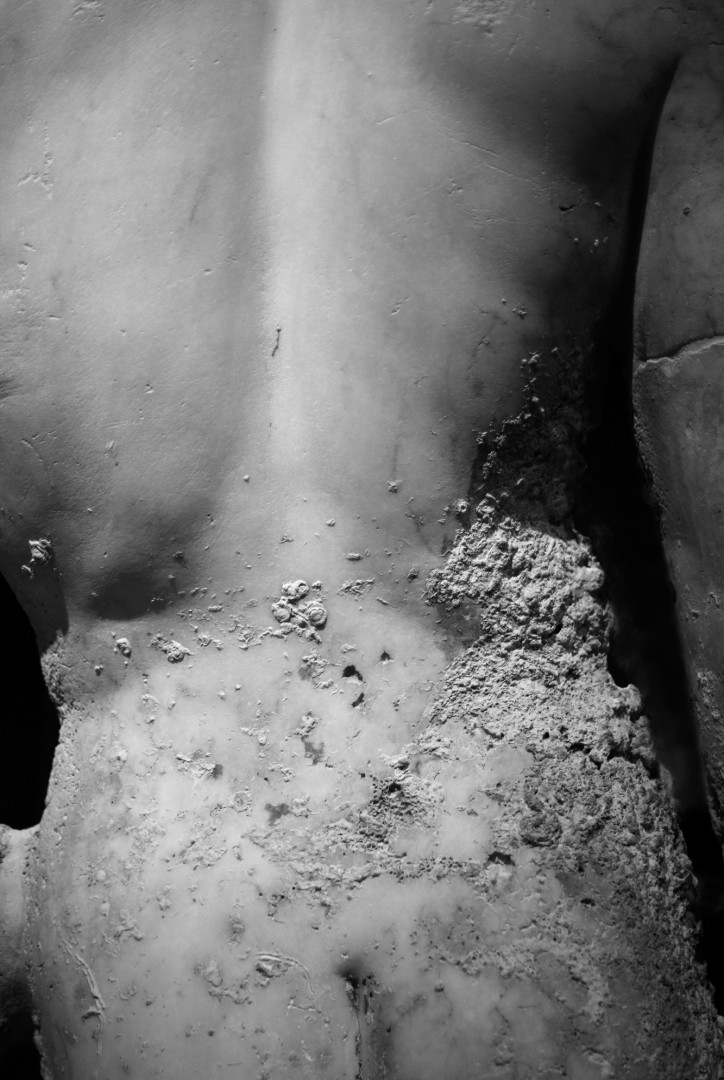
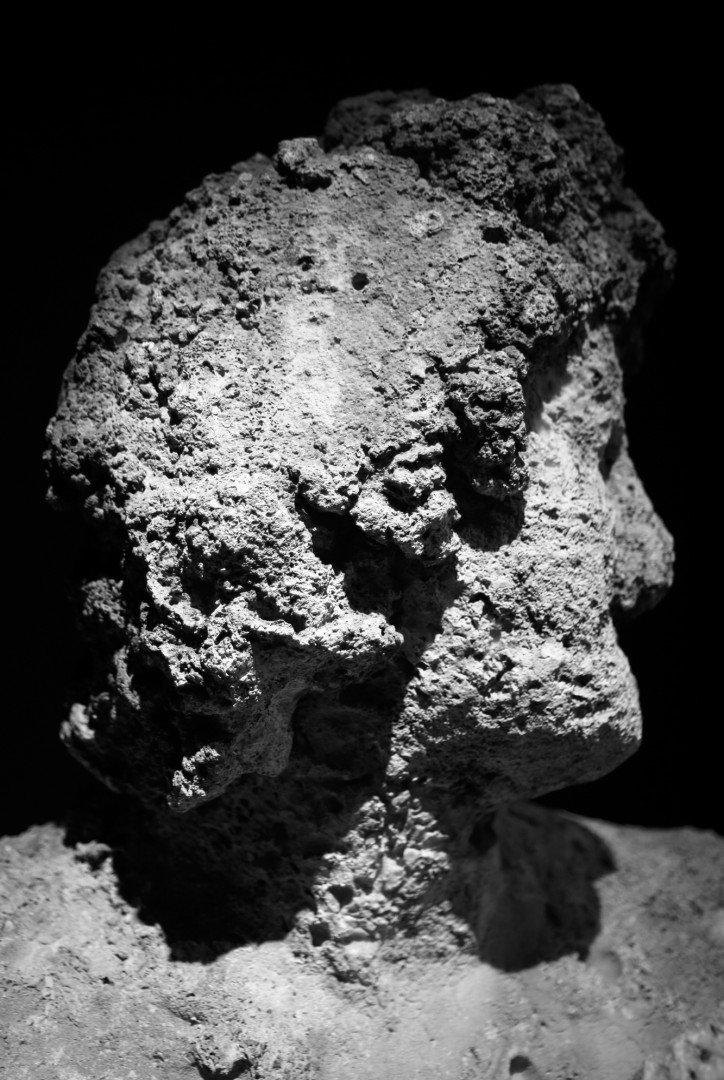
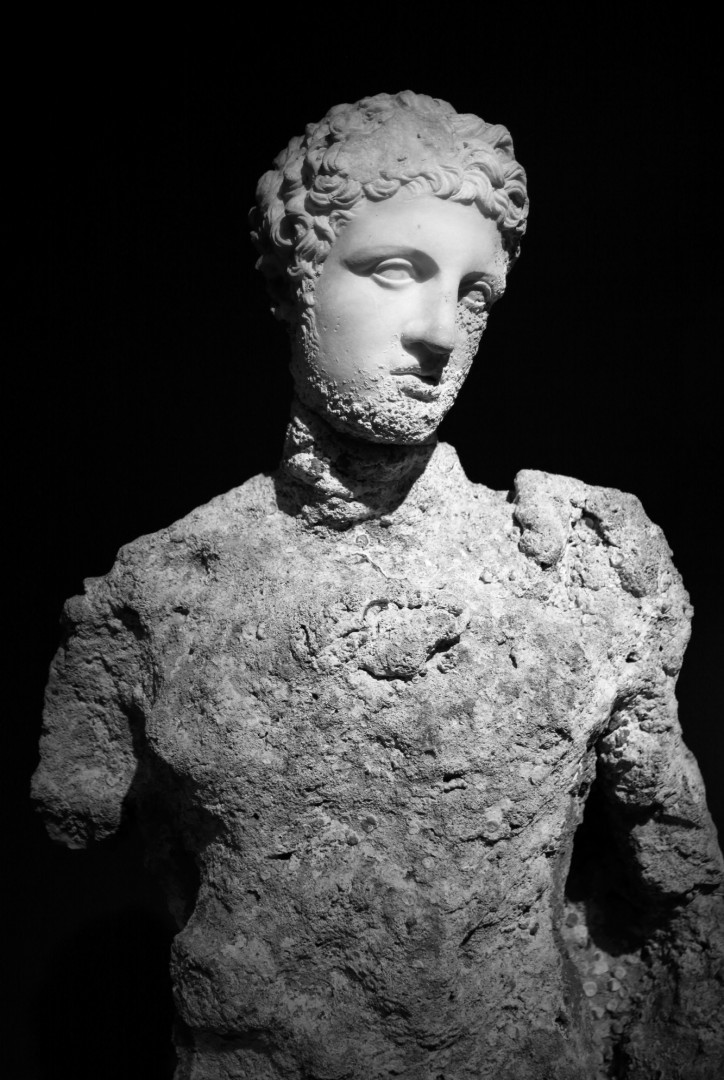
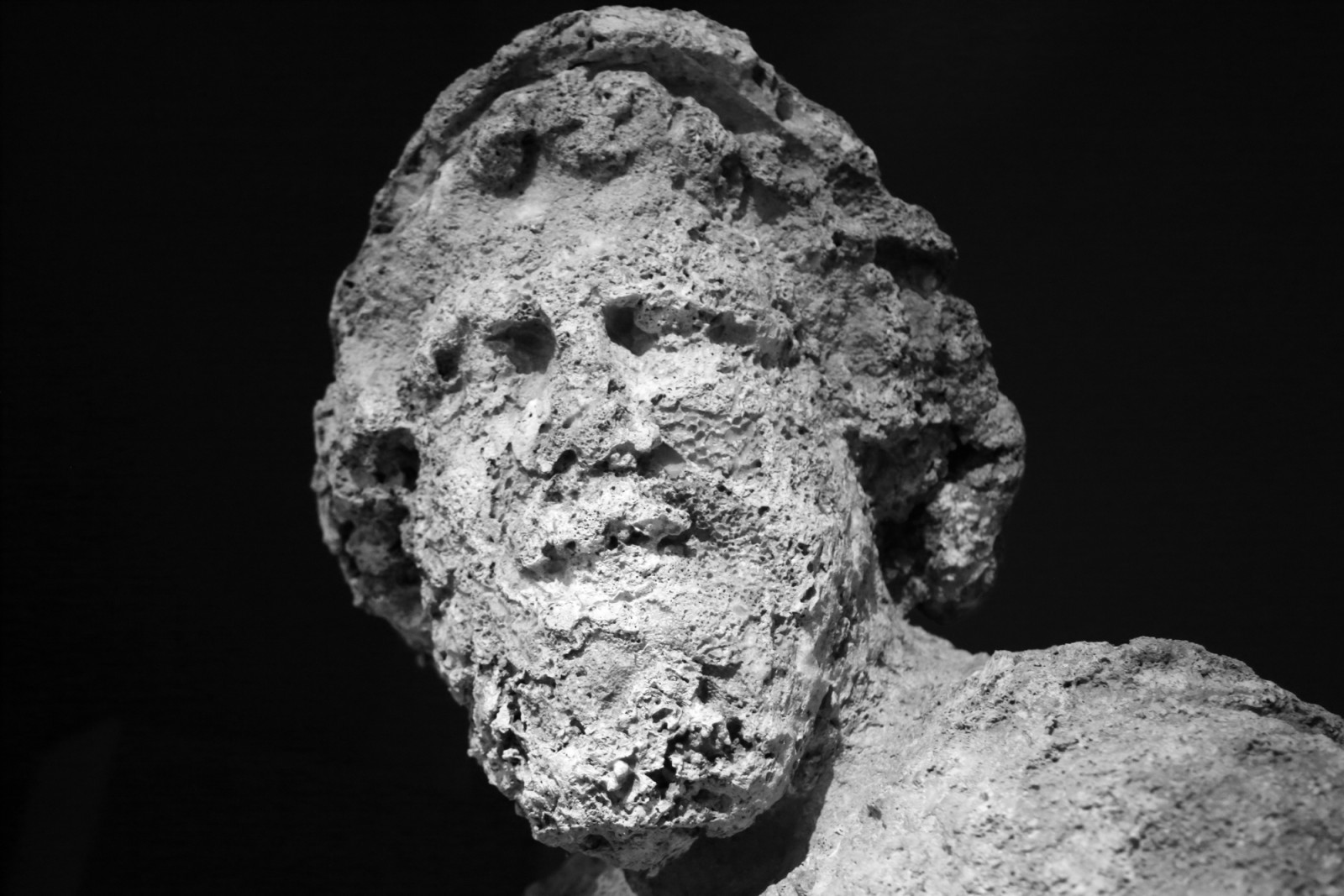
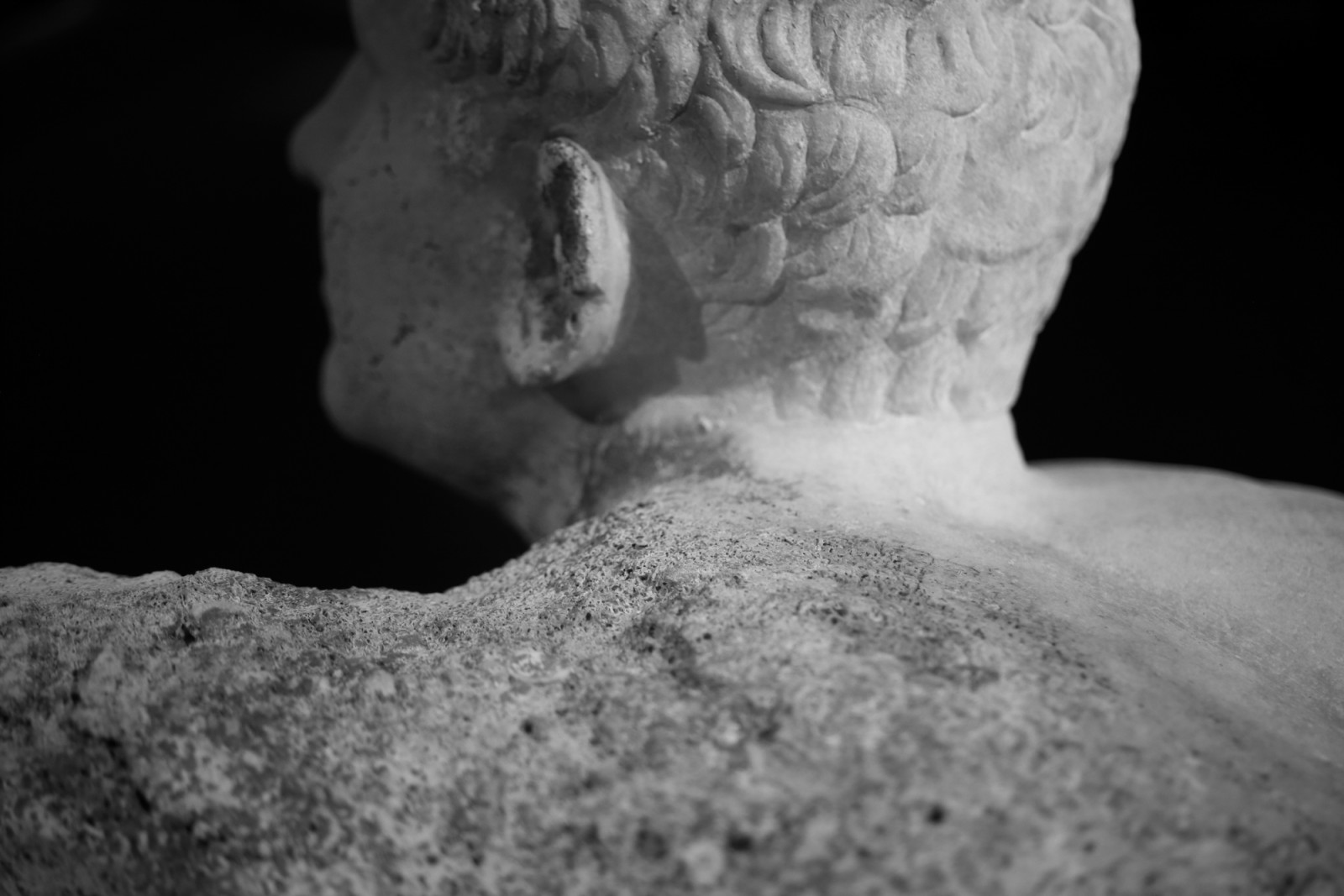
This body of work explores two of Hazewinkel's enduring research interests - the relationships between our bodies, the materiality of objects, and human memory work; and the ways through which evolvement/continuity and interruption/discontinuity can change the meaning and value of objects, and the diverse environmental forces and elements that can initiate such changes.
The images describe details of a selection of the dramatically excoriated 1st c. BCE marble sculptures that form part of the materially diverse collection of objects retrieved from the site of an ancient shipwreck.
In 50 BCE a cargo ship carrying a consignment of luxury items destined for the fashionable villas of the early Roman empire sank off the NE coast of the Mediterranean island of Antikythera. The ship and its cargo lay forgotten on the seabed until 1900 when a team of sponge divers discovered it by accident.
The collection, held at the National Archaeological Museum Athens, includes bronze and marble sculpture, gold jewellery, silver vases, glass bowls, bronze-work, terracotta amphorae, jugs, plates, bowls, coins, and the famous Antikythera Mechanism, one of the most complex ancient scientific instruments that survives today. What drew Hazewinkel to these marble figures was the physically transformative relationships between the marble, the natural chemical elements and living organisms of the marine environment that the figures were immersed in for approximately 2000 years. The arresting result of the transformative relationship between the marble and the living environmental ecology of the deep, including stone-eating organisms, motivated him to make these images, which are seductive, poetic and perhaps in a slow way, violent. The sculptures are all carved of exceptionally high-quality white Parian marble. The body parts that were buried beneath the sea-floor sediments remain as clear and bright as in their original condition. Some sections of the bodies remain highly polished, immune to the spectacular transformation evidenced by other parts that have become dramatically excoriated. With these images we experience a productive discord between the original figure’s refined aesthetic and the counterposing elements of environmentally induced rupture.
Another story is embodied in the excoriated figures. Archaeologist Elena Vlachogianni in her essay “Gods and heroes from the depths of the sea” tells it this way. She begins by tracing each sculpture’s stylistic antecedents, and in doing so she reveals their ancestral social meanings and values. She then points out that the consignment of the ship was amassed to supply the demands of a wholly new art market, and that the sunken objects were created exclusively as decorative adornments for the luxury 1st c. CE seaside villas of the Italian peninsula. Describing the ship’s cargo in the closing passage of her essay she brings this otherwise hidden story to the surface when she states - “The load was perhaps the first of its kind in Western civilization. Its contents, some of them disconnected from any sort of religious or votive purpose, are treated as objects of admiration and of an exclusively decorative character. The age in which art was fully subservient to itself had now arrived.”
E. Vlachogianni: Gods and heroes from the depths of the sea, in The Antikythera shipwreck, the ship, the treasures, the mechanism. National Archaeological Museum, 2012. 62-72