Beauty Is Between Us
Hosted by Nikos Yfantis Creative Studio Athens
April 18 – May 2 2026
Documentation images by Giorgos Vitsaropoulos
The exhibition positioned the viewer between photographic and figurative sculptural elements through a series of encounters wherein their own body blurred distinctions that conventionally keep separate the fields of artistic activity that characterise Hazewinkel's artistic practice.
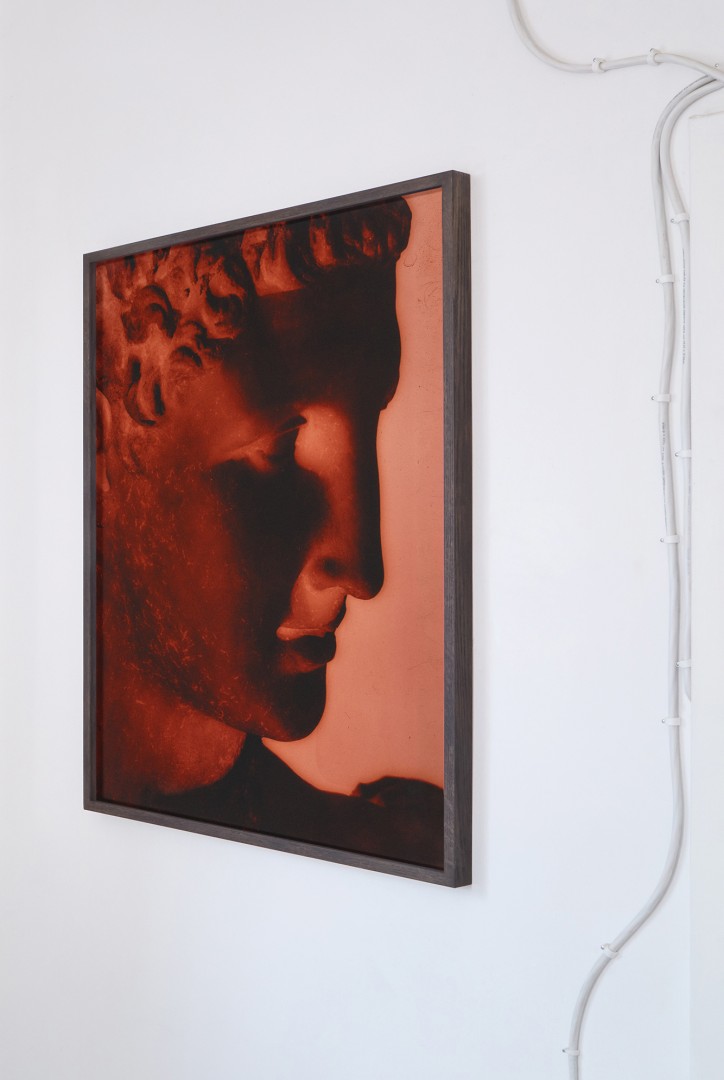
Animal hides and diverse photographic papers supported images created by Hazewinkel alongside images that he sourced from photographic archives, and from his personal collection of anonymous, professional and amateur photographers’ negatives that represent damaged ancient figurative sculpture.
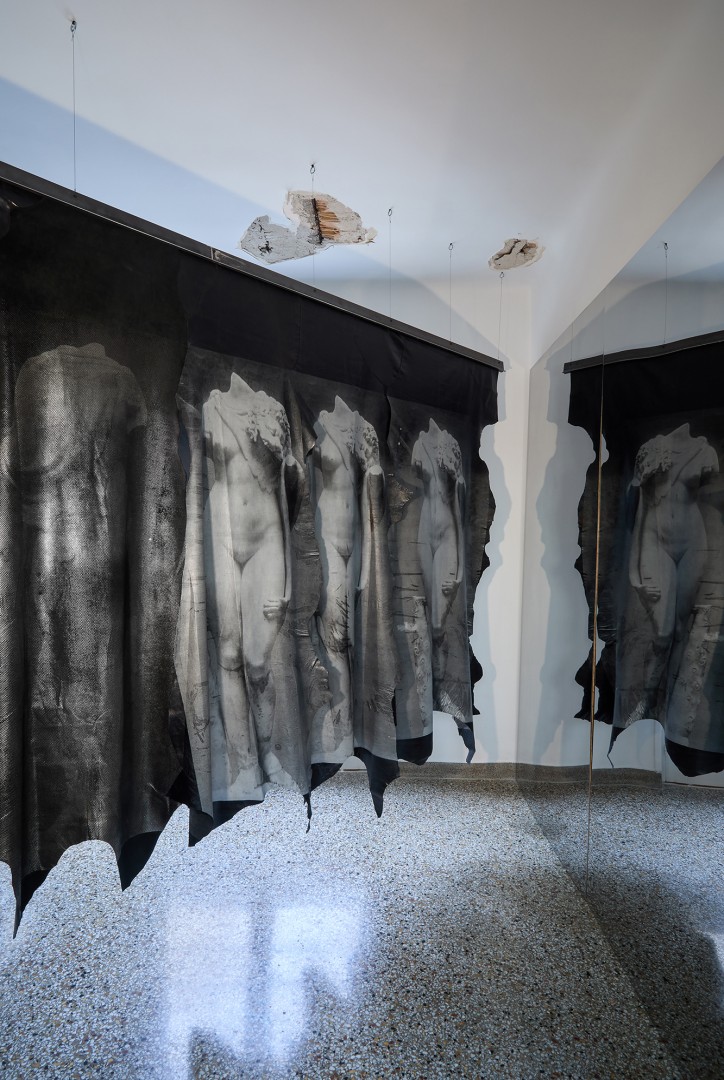
He describes these often badly scratched and abraded negatives as ‘damaged artefacts of modernity that cradle images of damaged artefacts of antiquity’. This persistent conceptual mirroring points toward one of the driving forces of the exhibition which is the generative potential that emerge through rhythmic oscillation, back and forth, between conditions of care and neglect.
Further blurring distinctions between photography and sculpture are a series of four reclining male figures cast in lead. Hazewinkel points out that making moulds for casting in, and shooting on analogue photographic film, both require an artist to think in negative.
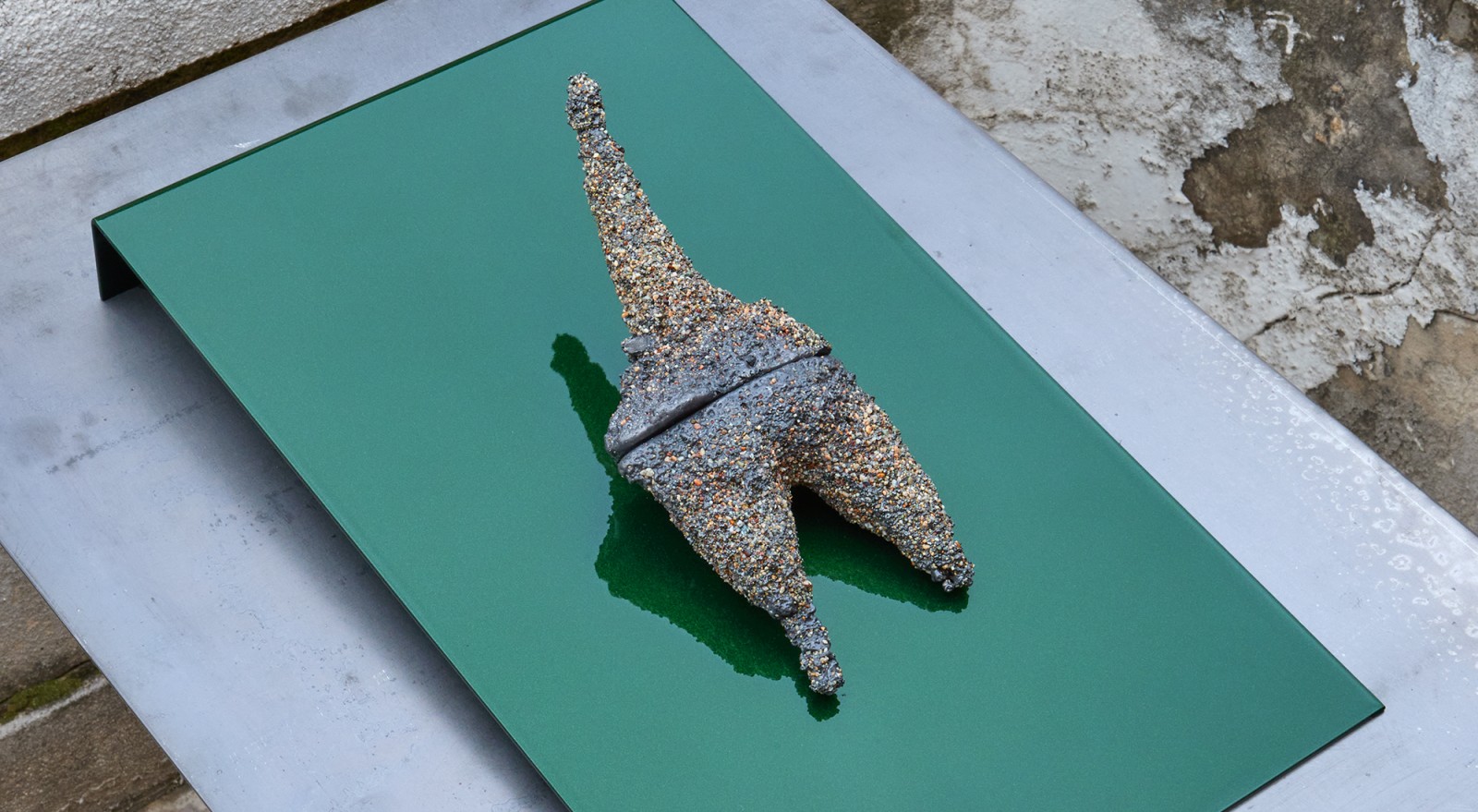
Here Hazewinkel has taken the casting process out of the foundry and back into the landscape where historically it was practiced. The landscapes he has worked in and with to create these four figures are the shorelines of Livoskopos and Katalimatsa on the Aegean island of Anafi.
By pressing pre-made, hand-modelled, ceramic forms into damp intertidal sands, he creates one-off / single-pour moulds. This runs counter to a common pursuit in casting processes wherein the production of multiple exact copies of the cast object is the objective.
Into his environmentally informed, unique-state moulds he pours molten lead which he produces in-situ on a camping stove. Once the metal has cooled he excavates the figure. Produced in this way, his figures carry in their surfaces and volumes, site-specific geological, marine and residual anthropic material that forever connects them with their place of origin; perhaps an artistic act of reflection on the very real, humanly felt connection to our own places of origin.
